Vulnerability to Misinformation among Cognitively Diverse Older Adults
Supported by Spring 2026 C-SPAM Seed Grant
Research Team
Principal Investigator
- Dr. Christi Trask, Assistant Clinical Professor (The Ohio State University Wexner Medical Center, Department of Psychiatry and Behavioral Health)
Co-Investigators
- Dr. Stacey Lipio Brothers, Postdoctoral Fellow (Wexner Medical Center, Department of Psychiatry and Behavioral Health)
- Katelyn McVeigh, Predoctoral Intern (Wexner Medical Center, Department of Psychiatry and Behavioral Health)
- Saloni Mathur, Undergraduate (College of Arts and Sciences, Departments of Neuroscience and Psychology)
- Vidhi Bakshi, Undergraduate (College of Engineering, Department of Computer Science and Engineering)
- Srestha Chattopadhyay, Undergraduate (College of Engineering, Department of Biomedical Engingeering)
Summary and Rationale
Older adults hold a disproportionate amount of wealth in the United States (Havens & Schervish, 2003). Even older adults who are cognitively healthy have been found to make disadvantageous decisions (Denburg et al., 2007), rendering them vulnerable to exploitation (Lichtenberg et al., 2015). Misinformation related to health topics is particularly significant, as it erodes trust in providers and scientists (Lyons et al., 2019; Borges do Nascimento et al., 2022), can foster polarization (Rocha et al., 2021), and can lead to negative health consequences (Lyons et al., 2019).
Unfortunately, older adults are thought to be at a particular disadvantage to evaluating health misinformation due to generally poorer proficiency with technology (Hargittai et al., 2018). Older adults with Mild Cognitive Impairment (MCI), which is a clinical diagnosis of significant cognitive decline and often a precursor to dementia, may have even greater difficulty evaluating and correcting false ideas (Mitchell et al., 2006). As such, they are likely particularly vulnerable to misinformation. Clinical neuropsychologists are routinely asked to evaluate older adults’ cognition and decision-making in order to make judgements about their ability to successfully manage their resources independently. However, little is known about the rates with which older adults encounter misinformation in their daily life, and how they may engage with it.
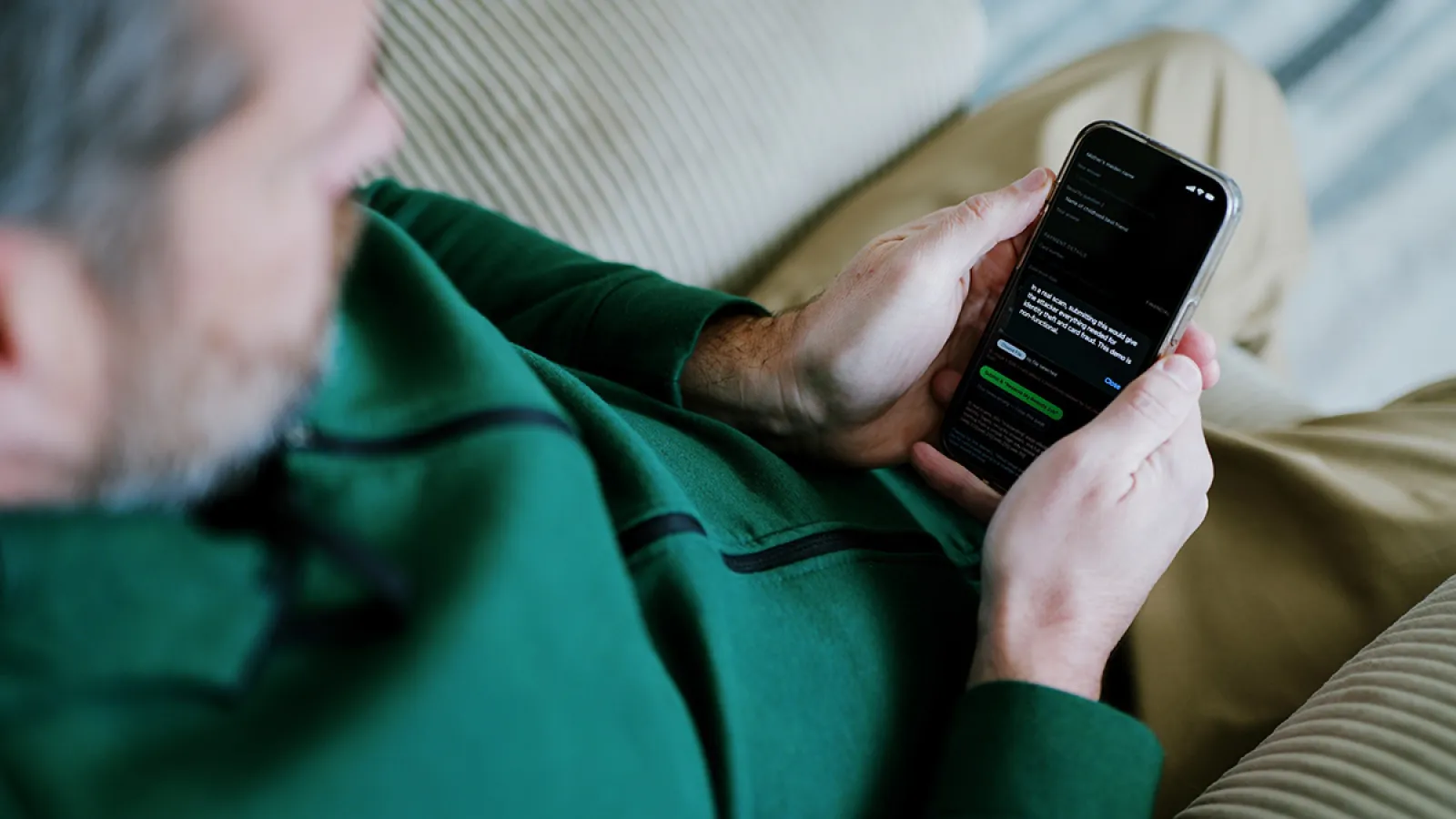
To our knowledge, little research has (1) examined susceptibility to misinformation among older adults with MCI specifically or (2) how variables such as familiarity with technology and social connectedness may moderate vulnerability to misinformation. Findings from the proposed study may be able to identify variables that are associated with greater likelihood of harmful health behaviors due to misinformation and susceptibility to scams. Ideally, this line of research would also help to inform who is most likely to benefit from interventions developed to help individuals think critically about information they are consuming online, learn ways to discriminate between genuine and fabricated information, and protect themselves from victimization. Using a similar research paradigm as Sarno and Black (2024), we aim to examine susceptibility to online deception via text messages, emails, and news headlines.
Methodology
Procedure
Participants will be 70 older adults (65 years or older) who completed a clinical neuropsychological evaluation at OSU’s Department of Psychiatry and Behavioral Health and, via their evaluation, are 1) deemed cognitively intact (n = 35), or 2) diagnosed with mild cognitive impairment (MCI; n = 35). As part of routine clinic procedure, all older adults are asked by a member of the study team whether they would like to be contacted about future research. Potential participants will then be contacted within 1 week of their evaluation and given a description of the study to determine whether they are interested. Interested participants will then come back to clinic to be consented and complete the study protocol, estimated to take two hours collectively in order to complete the misinformation detection task and questionnaires as outlined below. Participants will be reimbursed for mileage to and from their home address and receive $20 per hour for time spent completing the study protocol.
Measures
Participants will begin by completing a misinformation detection paradigm similar to that which is utilized by Sarno and colleagues (2024). Specifically, each participant will be presented with a series of 90 text messages, emails, and news headlines, verified as either genuine (50%) or fabricated (50%). Stimuli are made freely available online. Participants will view the stimuli in a random order and are asked to classify each piece of information as genuine or fabricated and rate the confidence in their classification. Participants will also be asked to complete a series of self-report questionnaires to examine executive functions, social cognition, history of scam involvement, familiarity and frequency of technology use, social connectedness, and personality variables. These measures will include the Ambiguous Intentions Hostility Questionnaire (AIHQ; Combs et al., 2007), subtests from the Delis-Kaplan Executive Functions Scale (D-KEFS; Delis, Kaplan, & Kramer, 2001), Digital Literacy Scale (DLS; Rodriguez-de-Dios et al., 2018), Internet Usage Questionnaire (Trask & Cicero, in preparation), International Personality Item Pool (Goldberg et al., 2006), Berkman-Syme Social Network Index (SNI; Berkman & Syme, 1979), de Jong-Gierveld Loneliness Scale – Short Form (de Jong-Gierveld & Tilburg, 2006), the Hinting Task (Corcoran, Mercer, & Frith, 1995), and the UCLA Loneliness Scale – 3 Item Version (Russell et al., 1980; Russell, 1996).
Plans for Future Work
This project will provide pilot data for future research and funding through an NIH "K" award. The proposed K award will examine predictors of vulnerability to misinformation (e.g., specific cognitive weaknesses, social isolation, technology literacy), whether social and cognitive interventions can bolster resistance to misinformation, and lastly, whether an AI conversationalist (developed by Ms. Chattopadhyay and Ms. Bakshi) can help older adults determine legitimacy of information found online. This project will support collaboration between the Departments of Psychiatry and Behavioral Health, Neuroscience and Psychology, Computer Science and Engineering, and Biomedical Engineering. This collaboration integrates the technical skill important for understanding, and eventually developing, technologies to protect older adults, with expertise about older adults and cognition.