Distinguished Scholars Colloquium Series
The C-SPAM Distinguished Scholars Colloquium Series recognizes accomplished scholars in the science of polarization and misinformation and encourages excellence in the field. Invited speakers visit campus to give a lecture and hold one-on-one research meetings with C-SPAM faculty, students and postdoctoral scholars.
Autumn 2026 Distinguished Scholars
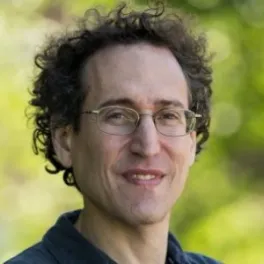
Jamie Druckman (University of Rochester)
Group Status Beliefs, Grievance, and American Politics
Monday, October 12, 2026
4:00 – 5:30 p.m.
Psychology Building Room 35
Lecture
Title: Group Status Beliefs, Grievance, and American Politics
Abstract: Americans are deeply political divided. They are split based on partisanship but they also fundamentally differ on how they view the world. In this talk, Dr. Jamie Druckman will discuss how two factors – beliefs about group status (e.g., racial attitudes, gender attitudes, religious attitudes) and grievance (e.g., victimhood) – shape public opinion on policy issues, voting, perceptions of discrimination, trust in institutions, and conceptions of American identity. Group status beliefs and grievance explain differences not just between Democrats and Republicans but also within the parties and among independent voters.
Biography
Jamie Druckman is the Martin Anderson Brewer Professor of Political Science at the University of Rochester. Druckman has published more than 220 articles and book chapters in political science, communication, economics, science, and psychology journals. He has authored, co-authored, or co-edited seven books. His recent books include Partisan Hostility and American Democracy: Explaining Political Divides (University of Chicago Press, 2024), Equality Unfulfilled: How Title IX's Policy Design Undermines Change to College Sports (Cambridge University Press, 2023), and Experimental Thinking: A Primer on Social Science Experiments (Cambridge University Press, 2022). For more information, see his website.
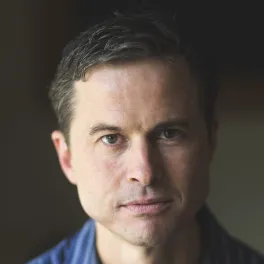
Brendan Nyhan (Darthmouth College)
Misunderstanding the Harms of Online Misinformation
Wednesday, November 18, 2026
4:30 – 6:00 p.m.
Psychology Building Room 35
Lecture
Title: Misunderstanding the Harms of Online Misinformation
Abstract: Misperceptions can shape public opinion and influence policy on major issues in politics, science, and health. But how much do we really understand about misinformation online?
In this talk, Dr. Brendan Nyhan will examine the evidence behind common myths about misinformation including:
- Most Americans are trapped in online echo chambers
- Salse news and extreme content are widely consumed
- Social media causes widespread societal harms
- Fact-checks often backfire
Biography
Spring 2026 Distinguished Scholar

Joseph Uscinski (University of Miami)
The People Who Break Things
Wednesday, April 8, 2026
4:30 – 6:00 p.m.
Psychology Building Room 035
Lecture
Title: The People Who Break Things
Abstract: This talk seeks to explain recent instances of institutional erosion in the United States and elsewhere. Human flourishing requires science, medicine, public health, education, economic markets, and democratic governance; all of these depend on stable, long-standing institutions that can develop standard operating procedures, sort fact from fiction, and implement directives. In recent years, however, political movements in the U.S. and elsewhere have organized around the destruction of society’s institutions and their knowledge-generating processes. For example, a popular U.S. movement that rejects established science, such as the germ theory of disease, has been successful at dismantling U.S. public health institutions, including the CDC and NIH, allowing once eliminated infectious diseases, like measles and whooping cough, to have a resurgence.
Drawing on 15 years of original survey data, Professor Joseph Uscinski identifies a distinct group of citizens who share a hostility toward political, scientific, and social institutions. Historically disengaged, these individuals were mobilized into a durable political coalition focused on breaking things, both with their political support and occasionally with violence. The result is a form of mass-enabled nihilism in which democratic norms are undermined not only by elites, but by citizens who actively seek institutional destruction. Professor Uscinski concludes by discussing the implications of such coalitions for democratic resilience and outlining strategies for putting the broken scientific, medical, public health, educational, economic, and democratic institutions back together.
Biography
Dr. Joseph Uscinski is a professor of political science at the University of Miami. For more than a decade, he has been polling Americans about their beliefs in conspiracy theories and other dubious ideas. Professor Uscinski has published more than 60 peer-reviewed articles and several books, including American Conspiracy Theories, widely considered the foundational study of modern American conspiracy theories, and Conspiracy Theories: A Primer, the first textbook on conspiracy theories.