Helen Murphey: Populism and Conspiracy Theories in the Global Context
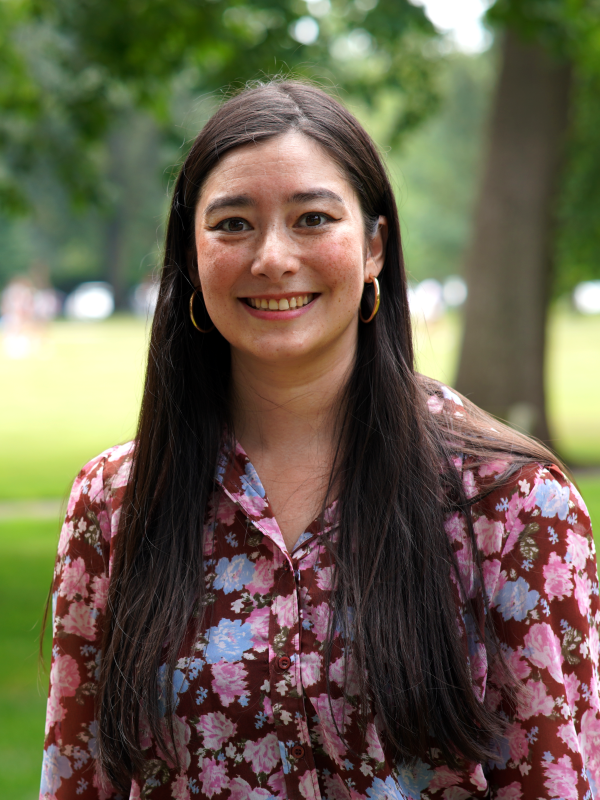
Helen Murphey
Postdoctoral Scholar, Mershon Center for International Security Studies
Research Focus: Conspiracy theory and polarization in North Africa; politics of medical skepticism and conspiracy theory
Question:
C-SPAM: Thanks for joining us today! Could you start by telling us about some of your research interests?
My PhD research focused on Salafism in North Africa, a conservative religious movement in Sunni Islam. After the Arab Uprisings in 2010-2011, some Salafis formed political parties for the first time, impacting democratic politics and also generating substantial opposition. While I was studying Salafism, I got really interested in analyzing this polarization. Among other things, I was tracking polarization in environments where left-wing/right-wing wasn't necessarily the dominant axis. In Tunisia, Islamist/secularist polarization had a significant impact on politics and the democratic transition and consolidation from 2011-2021.
I also got interested in the prevalence of conspiracy theories in politics. One area I started to look at was the growth of populism in North Africa and the relationship between populism, polarization, and conspiracy theories after the Arab Spring in Egypt and Tunisia. For instance, I wrote a chapter on conspiracy theories in Egypt and how they were instrumentalized by different political actors to serve different purposes.
Additionally, I have a parallel research agenda on conspiracy theories about health. I’ve been looking at how anti-vaccination conspiracy theories have become integrated into polarized politics.
Question:
C-SPAM: What have you been focusing on during your time at Ohio State?
I've been a postdoc here at the Mershon Center for International Security Studies at Ohio State for almost two years, where I’ve been finishing up my PhD research and moving on to my new research agenda. The Mershon Center focuses on international, national, and human security, and I approach conspiracy theories, polarization and populism as human security challenges. Human security involves the conditions that allow individuals and communities to live in safety and dignity. I look at how conspiracy theories and polarization create more long-term hurdles for community cohesion, making it difficult for people to trust each other.
Since I’ve been at Ohio State, I’ve looked at the ways the securitization of migration in North Africa – as well as polarization and conspiracy theories over that issue – have affected international dynamics. I published an article in the Journal of Populism Studies last year discussing how the securitization of migration and populist narratives have allowed for certain international alliances.
I’ve also looked at the ways that conspiracy theories are used as a governance tactic for populists in power more generally. When populists enter government, it becomes difficult to continue to use anti-elite framing if they are now technically part of the governing structure. Conspiracy theories function as kind of a tool they can use to keep identifying alleged new secret elites to blame.
And these are increasingly global problems. They're not just limited to one region. That’s deeply concerning, but it also means that there is a lot to learn from studying and comparing different cases. These are problems that everybody is facing. Whatever way we address this is going to be of relevance to everyone.
Question:
C-SPAM: What are some of the notable conspiracy theories you have looked at in your work?
Conspiracy theories about migration have become quite prominent in North Africa. For context: North Africa has grown as a transit region for migration. There was a lot of migration originating from North Africa to Europe after the Arab Spring, but in recent years especially, there's also been a lot of migration from Sub-Saharan Africa through North Africa. That has led the EU to enter into agreements with some North African countries to do border management.
This has led to a larger population of migrants remaining in the region who are not able to reach Europe, and it has inflamed tensions that had been latent or understated before. Conspiracy theories similar to the Great Replacement conspiracy theory or demographic conspiracy theories used by the far right in Europe and the US are being used by some North African politicians and far-right groups about the presence of Sub-Saharan African migrants. They’re suggesting that migration is a plot to destabilize politics or to change national identity.
This development can be read as the spread of racist, extremist conspiracy theories about migration, or as a localization of these conspiratorial tropes. It shows that these conspiracy theories aren't just limited to one specific context. They do travel, they do become localized, and they are instrumentalized by different actors.
Another topic I’ve looked at is the historical precedents of vaccine conspiracy theories. As long as there have been vaccines, there have been people who have been skeptical. The degree to which this skepticism becomes conspiracy theory is somewhat debated, because when any new technology comes, there will be some skepticism. At what point does that become a conspiracy theory or misinformation? Conspiracy theories, by definition, require attributions of a secret malevolent plot, and even in the late 1800s, early 1900s, there were people who thought that smallpox vaccination was used to deliberately spread illness.
My co-author and I also look at how similar skepticism of medical motives occurred around HIV/AIDS, polio, and other types of pandemics or epidemics. We also grapple with how to approach conspiracy theories when there may be reason for mistrust. For instance, we look at some of the concerns about HIV/AIDS medication in Sub-Saharan Africa—especially in South Africa, where mistrust of antiretrovirals was informed in part by fears of bioweapons in apartheid times. Understanding the root causes and contexts producing mistrust is important.
Especially in times of insecurity, when people are scared or nervous and want to find something to believe in, conspiracy theories can become especially prominent. They are attractive to people because they provide a very simple narrative of who's to blame in the midst of uncertainty.
Question:
C-SPAM: How do you see your work aligning with the goals of C-SPAM? How has the collaborative influenced your research?
My work looks at the intersection of polarization, populism and conspiracy theory. I'm especially interested in the ways that these reinforce each other. Complementing what some of the folks at C-SPAM are working on, I'm interested in the ways that conspiratorial narratives are developed from a qualitative political science perspective, and how populist anti-elitism and conspiracy theories reorient polarized political landscapes.
It’s been really helpful to learn from other researchers who are approaching these topics from the more quantitative or experimental side. That is also such an important aspect, and it has informed my research, too. I think it's been really helpful to bring those sides together in the collaborative and explore these topics from interdisciplinary perspectives.
Question:
C-SPAM: How do you see your work having an impact in the public sphere?
I published a piece in Time last year about the historical roots of anti-vaccination beliefs, and was interviewed by a journalist for the Financial Times. It seems to be a topic that people are interested in learning more about, and one that is increasingly relevant to our global politics. I think that there is a lot of public engagement opportunity.
In the future, it would be interesting to collaborate with some folks about ways to counter anti-vaccination misinformation. I think that becomes the next step: Once we've understood some of the roots of why people believe this, what are effective ways to address it? What are interventions that can be developed?
I think a lot of that is going to be community-based, and that would be something more long-term to look at: how to engage community partners. If I'm just an academic saying, “This conspiracy theory is misinformed for X, Y and Z reasons,” my voice is not necessarily going to be one that people listen to, particularly if they are already distrustful of academia.
Understanding where there is trust and how to work within that in a collaborative way is important—whether that's a community institution that is trusted or a religious institution, etc. I don't think misinformation and conspiracy theories are really going to be addressed just by us in academia telling people they are not right.
Question:
C-SPAM: Where do you see your work going next?
I'm going to be starting as an assistant professor of political science at Southwestern University in Texas this autumn. I’m looking forward to further developing my existing projects, particularly the populist governance angle and how conspiracy theories fit into that, and pursuing opportunities for community and public engagement.
The conversation above has been edited for brevity and clarity.