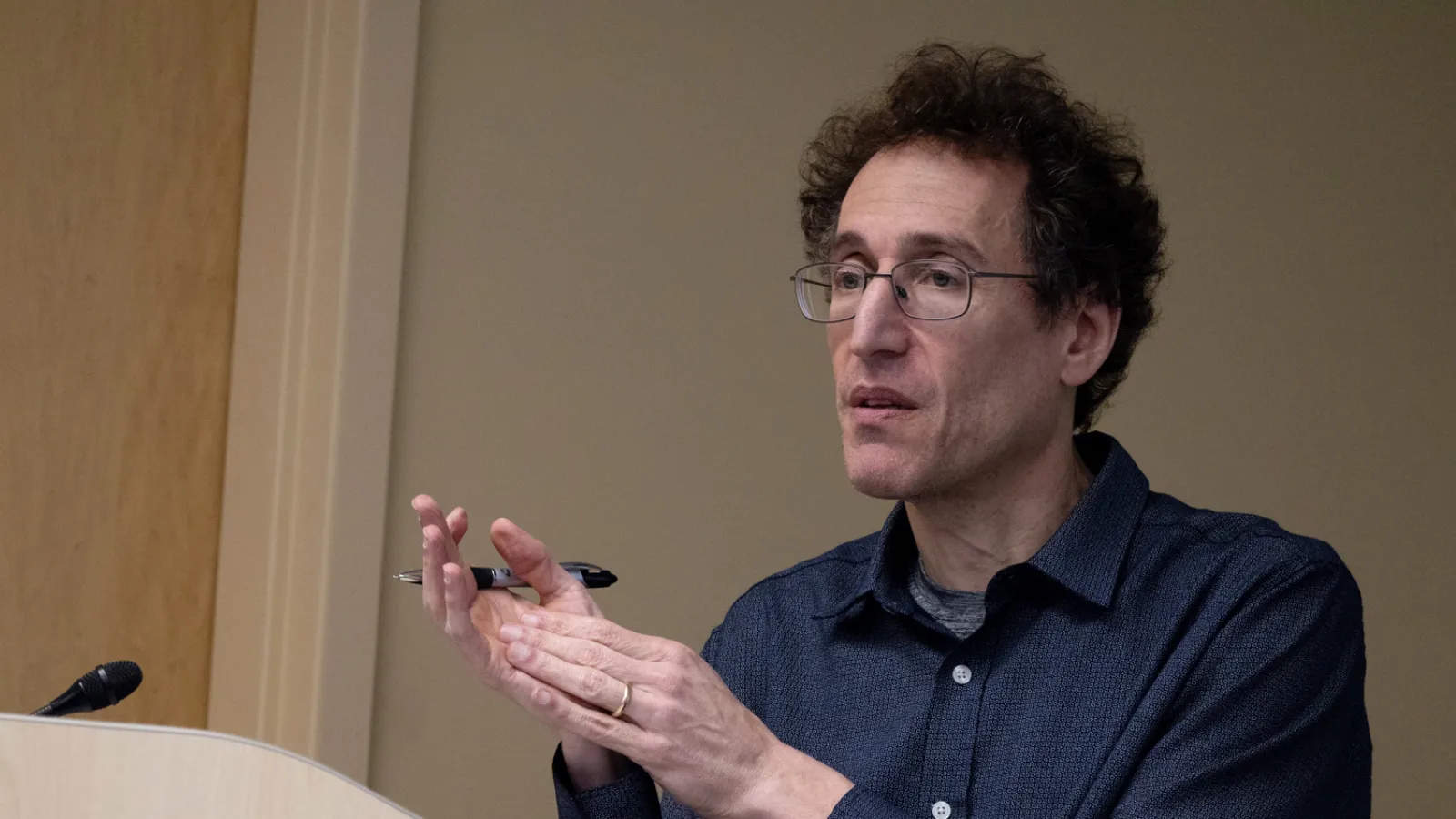
C-SPAM honors Jamie Druckman for nuanced work on political divisions

Ohio State’s Collaborative on the Science of Polarization and Misinformation (C-SPAM) last week honored Jamie Druckman, a University of Rochester political science professor and expert on political behavior.
While visiting campus to receive the C-SPAM Distinguished Scholar Award on Oct. 12, Druckman spoke about his groundbreaking research and key findings. Among them: American politics today are deeply polarized, but these divisions may have less to do with political affiliation than with people’s underlying beliefs about who should hold power in society.
“This is not identity politics as commonly construed,” Druckman told faculty, students and postdoctoral scholars gathered for the C-SPAM Distinguished Scholars Colloquium in the Psychology Building.
“It’s not the identities that people hold, but it’s the beliefs about the identities. It’s the beliefs about which identities should be in positions of power and which should not.”
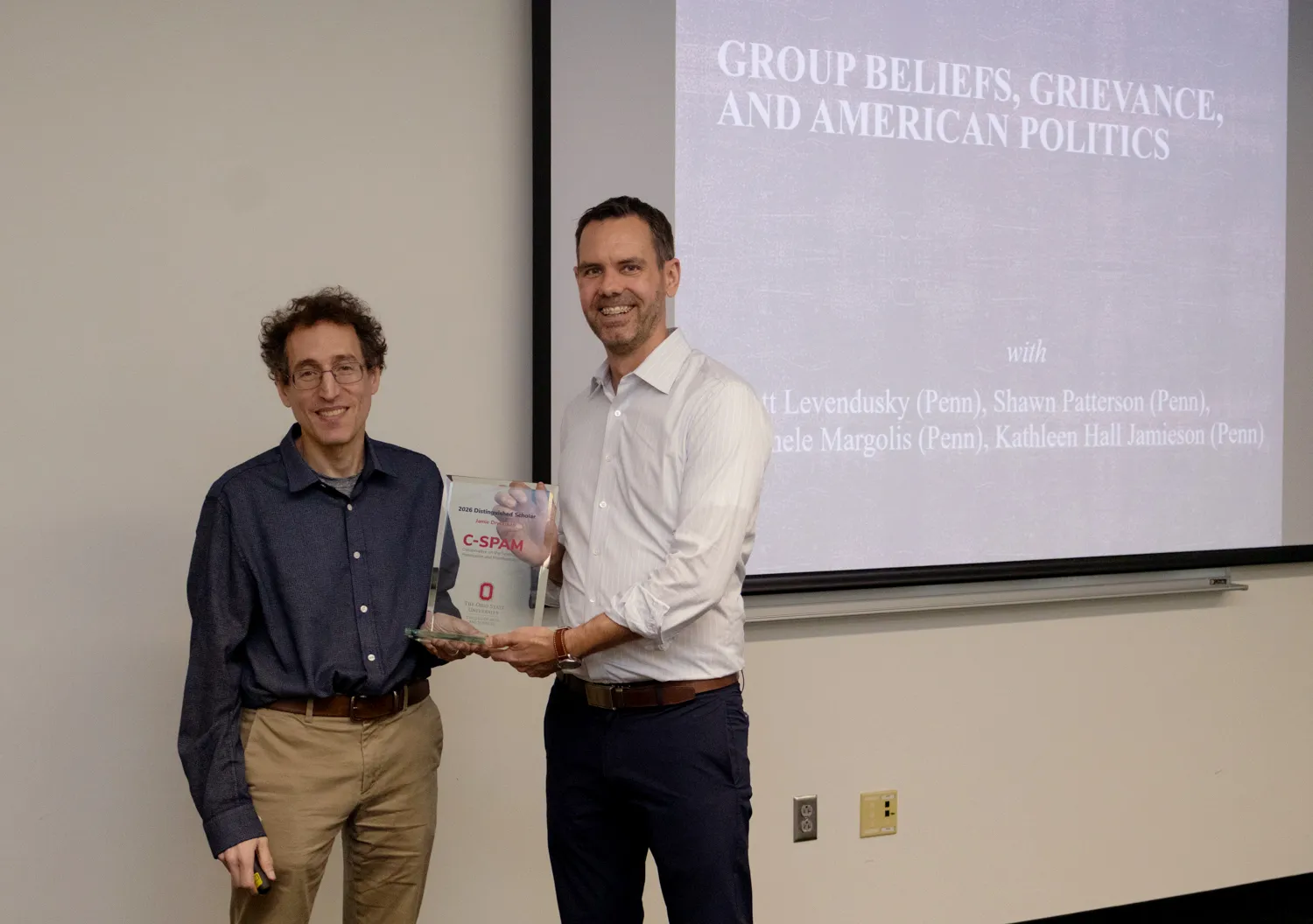
The author of seven books and more than 200 articles, Druckman was recently elected to the National Academy of Sciences, in part for his work on polarization and misinformation. The C-SPAM award likewise recognizes his important contributions to the field.
Underpinning Druckman’s research is a close look at group status beliefs, or beliefs about which racial, gender and religious groups should hold social, economic and political power in public life. Using data collected between 2020 and 2025, his team measured people’s levels of sexism, racial resentment and Christian nationalism.
On one end of the spectrum, researchers noted those with “traditional” group status beliefs: people who believe historically advantaged groups — white, male Christians — should lead, Druckman said. On the other, they found people with what they termed “modern” beliefs: those who think power should lie with historically disadvantaged groups, including nonwhite, female non-Christians.
Druckman’s team then looked at how these group status beliefs correlated with political behavior. They found that as someone’s traditional beliefs increased, so did their support for Donald Trump — but that these preferences cut across party lines. For example, even among Democrats, people who expressed high levels of hostile sexism were more likely to vote for Trump than Kamala Harris in the 2024 election, Druckman said. Grievance, or perceived victimhood, was also a powerful driver of voter behavior.
“What we end up with, instead of a politics based on coordination, negotiation, and bargaining, it’s more of a zero-sum, group-based politics,” he explained.
“There are in-groups and out-groups competing with one another. That makes it very difficult to have negotiations and be productive in government.”
C-SPAM faculty director Kurt Gray praised Druckman for studying politics in a less binary way.
“Jamie’s research is inspirational. It moves beyond simple economies of red versus blue, Republican versus Democrat, to get the deeper social and social psychological drivers of voting behavior,” he said.
“It’s a great example of big-picture scholarship and has already inspired the Ohio State community to think big!”
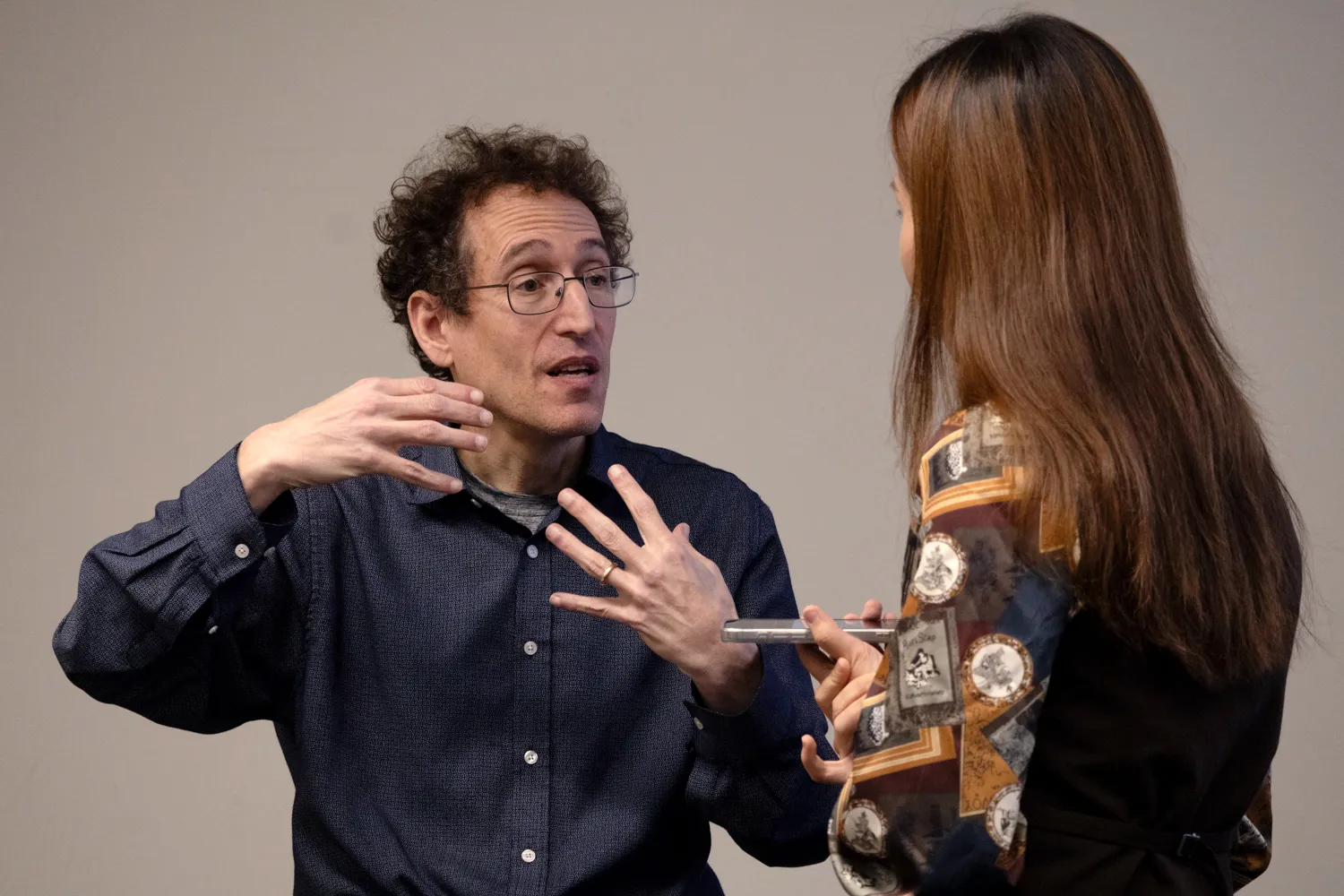
Druckman’s talk concluded a busy visit to campus, where the political scientist also networked with Ohio State researchers and met with faculty for one-on-one discussions. The event drew an interdisciplinary audience from units across the university, including the Fisher College of Business and departments throughout the College of Arts and Sciences.
C-SPAM’s next Distinguished Scholars Colloquium on Nov. 18 will recognize the work of Dartmouth College professor Brendan Nyhan and welcome him to campus for his lecture, Misunderstanding the Harms of Online Misinformation.
Listen to a recording of Jamie Druckman’s full lecture.