Inaugural seed grants fund new research on polarization, misinformation

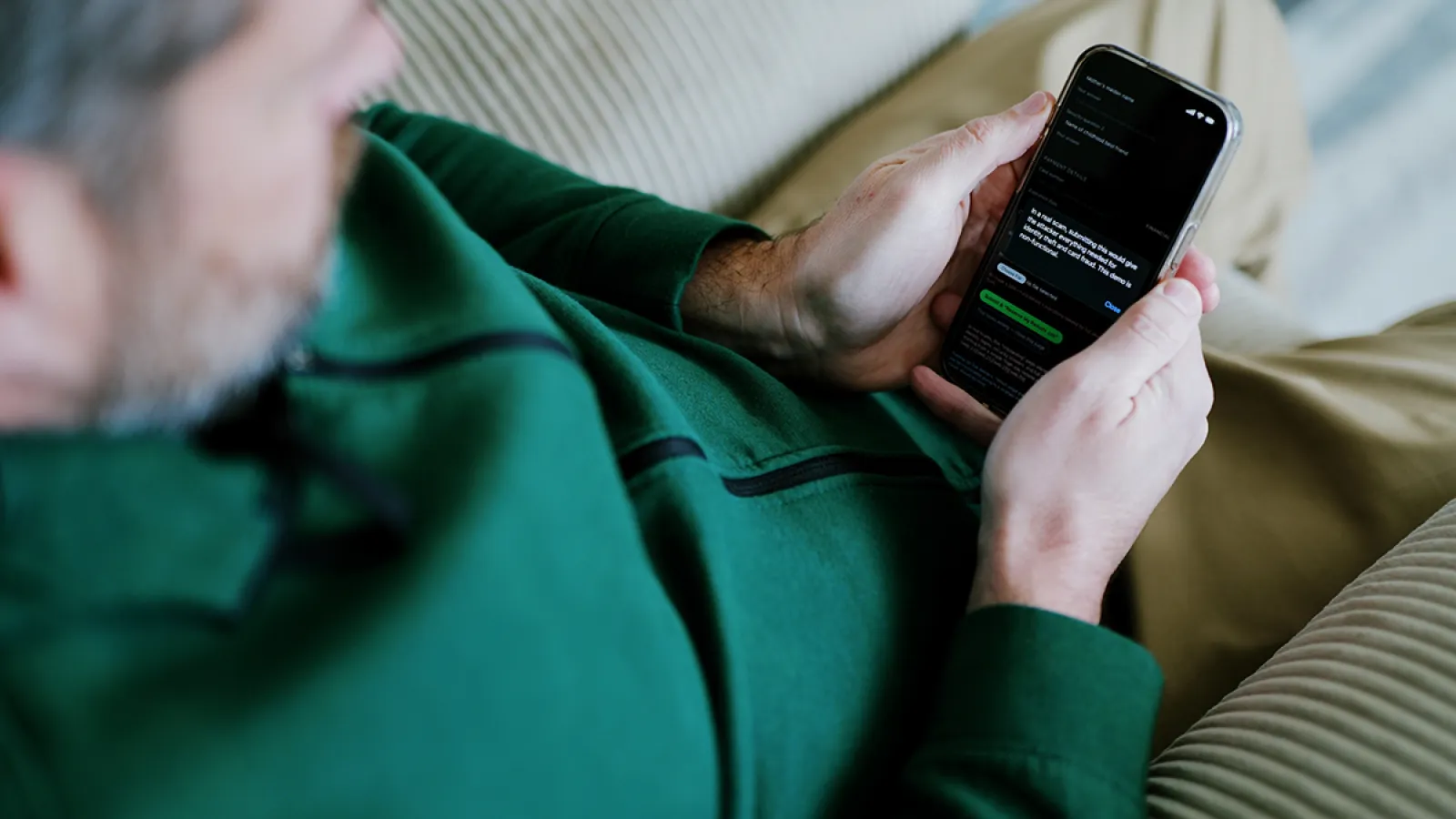
One of Dr. Christi Trask’s patients sent money to someone claiming to be Elon Musk. Another believed she was texting with Cincinnati Bengals quarterback Joe Burrow and sent him funds, too.
Stories of older adults losing their money to fraudsters have regularly appeared in the headlines—and increasingly, Trask has noticed, in her office at the Ohio State University Wexner Medical Center. As a clinical neuropsychologist, she began to wonder if cognitive impairment could be making her patients more vulnerable to misinformation.
“Did cognitive issues play a role here?” she said. “Were people having a hard time differentiating between what is a likely versus unlikely situation?”
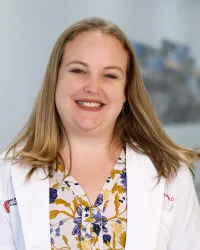
With support from a new C-SPAM Seed Grant, Trask will now begin investigating these kinds of questions. This spring, both her research team and a team led by Thomas Wood, an associate professor in the Department of Political Science, received the research award, the first issued by the Collaborative on the Science of Polarization and Misinformation (C-SPAM). The grants are designed to help Ohio State scientists launch or advance studies on polarization and misinformation, and the collaborative plans to issue up to two awards per semester.
Reviewers sought proposals with a strong interdisciplinary component and promise for future funding, explained Kurt Gray, the collaborative’s faculty director and the Weary Foundation Endowed Chair in Social Psychology.
“Ohio State is home to so many great ideas for tackling polarization and misinformation, and these seed grants allow us to turn these ideas into impactful studies that will shape the field,” he said.
With support from the $7,500 grant they received, Wood and Katie Gouge, a political science doctoral student, will investigate how people weigh evidence and form opinions around politically polarizing issues, particularly when some of the facts they encounter are weak.
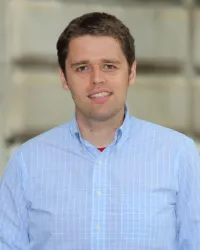
Their study was inspired by the trial of an Australian woman convicted of murdering her in-laws by feeding them poisonous “Death Cap” mushrooms, Gouge explained. Prosecutors presented compelling evidence that the woman had researched where to forage the toxic fungi, along with information about fatal quantities. But ambiguous geolocation records for her phone threatened to undercut their case.
“It’s so interesting to us that this weak piece of evidence seems to have diluted the strongest,” Gouge explained. “The mushroom case sort of sent us down this rabbit hole.”
Wood and Gouge propose that instead of paying greater attention to strong evidence or disregarding facts they feel are irrelevant, people may mentally average all the information they receive about an issue. In other words, strong facts could become less persuasive when weak ones are added to the mix.
The researchers will use C-SPAM funds to test their theory through a multi-arm survey of 3,000 participants. There, they will present people with both strong and weak evidence around deeply partisan issues, such as immigration enforcement, and measure how this affects opinion. They plan to share their findings through both a manuscript and conference presentations.
Trask and her team will also use their $5,800 C-SPAM Seed Grant to recruit participants—in this case, older adult patients Trask’s clinic has assessed for mild cognitive impairment. Along with a control group, the patients will be asked to evaluate the truthfulness of 90 text messages, emails and news headlines. They will also complete questionnaires to help researchers evaluate each participant’s cognitive function, familiarity with technology, social connection and more.
“If that’s what we’re dealing with, we have to be better informed and better armed to push back.”
With this pilot data, Trask and her collaborators plan to apply for an NIH “K” award to further study vulnerability to misinformation among older adults. They also hope to develop practical interventions, such as an AI agent that can help people determine the legitimacy of the information they encounter.
Trask said she realized the importance of this work when a scammer digitally impersonated one of her students’ voices and tricked the woman’s grandfather into sending a large sum of money.
“If that’s what we’re dealing with, we have to be better informed and better armed to push back,” Trask said.
Joining her on the project are postdoctoral fellow Stacey Lipio Brothers and predoctoral intern Katelyn McVeigh, both from the medical center’s Department of Psychiatry and Behavioral Health. Three undergraduate students will also work on the study, including Saloni Mathur from the Departments of Neuroscience and Psychology and Vidhi Bakshi and Srestha Chattopadhyay, both part of the College of Engineering.
C-SPAM has encouraged both Wood and Trask’s teams to present their findings to the collaborative within a year. It will open applications for the next round of seed grant funding in autumn 2026.
Launched in 2024 with support from the Weary Foundation, C-SPAM facilitates interdisciplinary scientific research on the causes of polarization and misinformation, as well as solutions to these urgent issues. It is housed in the Department of Psychology.